Nightlife
A New Congregation, Maison Estelle Takes the Old Limelight
The London private club signs for the Sixth Avenue church where New York once danced until dawn
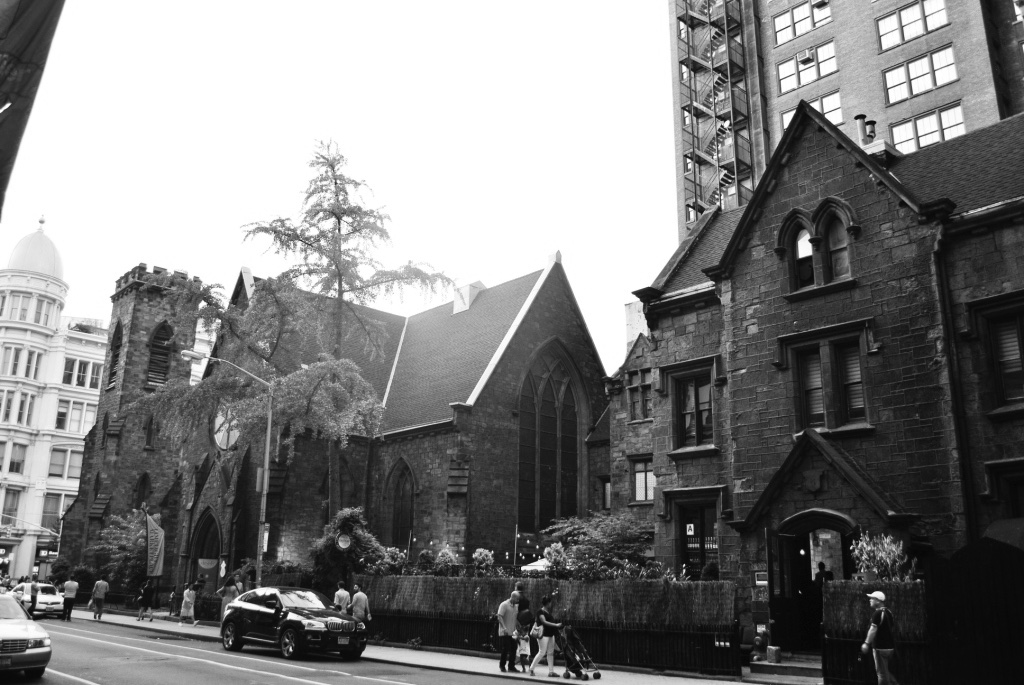
The brownstone on the corner of Sixth Avenue and West 20th Street does not look like a nightclub. It never did. That was the whole point.
For two decades the old Church of the Holy Communion was the Limelight, the most notorious dance floor in Manhattan. After that it was a mall, then a gym, then a lot of empty space behind a for lease sign. Now it has found a new tenant, and the people inside will be paying dues.
Maison Estelle, the London private club, has leased roughly 30,000 square feet of the church, Commercial Observer reported this week. The deal for the main sanctuary at 656 Avenue of the Americas will be the first American outpost of Estelle Community, the company founded by the entrepreneur Sharan Pasricha. Its three clubs in Britain are known for their exclusivity, a strict ban on photos, and annual dues that the trade paper estimates at around $4,000.
Upjohn, Gatien, and the Club Kids
The building came first. Richard Upjohn designed the church in the 1840s, and it is often described as the first asymmetrical Gothic Revival church in the country, a small English parish church dropped into what was then a fashionable residential street. It served an Episcopal congregation until 1975. The city made it a landmark in 1966, and it sits inside the Ladies' Mile Historic District.
Then came the night. The nightclub owner Peter Gatien opened the Limelight in the building in 1983, and the old sanctuary began hosting a very different congregation. Madonna and Prince came through. So did Andy Warhol and Grace Jones, according to the Limelight archive that went on view at Left Bank Books last fall, which Gothamist toured. There were shampoo parties in the eighties and foam parties in the nineties.
By the early nineties the Limelight belonged to the Club Kids, the costumed crowd around the promoter Michael Alig and his Disco 2000 nights. That spectacle turned tragic in 1996, when Alig and his roommate killed a fellow Club Kid, Andre "Angel" Melendez. The case became the book Disco Bloodbath and later the film Party Monster. Around the same time, Mayor Rudy Giuliani's quality of life crackdown on nightlife zeroed in on Gatien, who was eventually deported to Canada.
The old sanctuary began hosting a very different congregation.
The club closed and reopened under another name. The last dance floor in the building was gone by 2007.
The Hardest Room to Fill
What came after has been a long run of bad luck. A shopping arcade called Limelight Marketplace opened in 2010 and did not last. Gyms followed. A French bistro and a luxury pop up came and went. Curbed once summed up the problem neatly. The inside is a maze of nooks that were perfect for a nightclub and useless for anyone trying to find a handbag, and there are no big windows to tell the street what is going on inside. One shop owner told Curbed that many visitors came only to look around and announce that they had once passed out there.
The wings of the old church have done better. Limelight Pizza NYC holds one side and the dim sum restaurant Jue Lan Club the other. But the sanctuary sat empty. In August 2025 the landlord, Ben Ashkenazy's Ashkenazy Acquisition Corporation, hung signs offering the building for sale or for lease.
Estelle was reportedly looking elsewhere first, at a five story mansion on East 81st Street, before settling on Sixth Avenue. Brokers from Savills represented the club. The rent and the length of the lease have not been disclosed.
Dinner, Not Dancing
Anyone hoping for a return of the foam should lower expectations. According to Commercial Observer, which cited the real estate outlet Traded, Estelle's representatives told Community Board 5 that they plan a full service restaurant in the space, not a nightclub. Carson Griffith was first to report the club's move into the building.
That fits the moment. Members clubs are back in a big way in New York, as we noted when we looked at the city's new appetite for membership. The cards have replaced the velvet rope. The question is no longer whether you can talk your way past the door. It is whether your application gets approved.
There is something fitting about the swap. The Limelight ran on VIP lists and clipboards. Maison Estelle runs on the same instinct, only quieter, and with the cameras checked at the door.
No opening date has been announced. Spokespeople for Estelle and for the landlord did not immediately respond to Commercial Observer. For now the sign still hangs on a church that has been a parish, a cultural center, a nightclub, a mall, and a gym. It is about to try being a dining room for people who would rather not be seen.
The congregation is changing again. This time it comes with a membership card.