Music
Arepas on the Plaza, Dudamel's Gala Sends the Philharmonic to Europe
A bilingual banner, a Spielberg surprise and Ellington's Harlem, then New York's orchestra packs for Paris
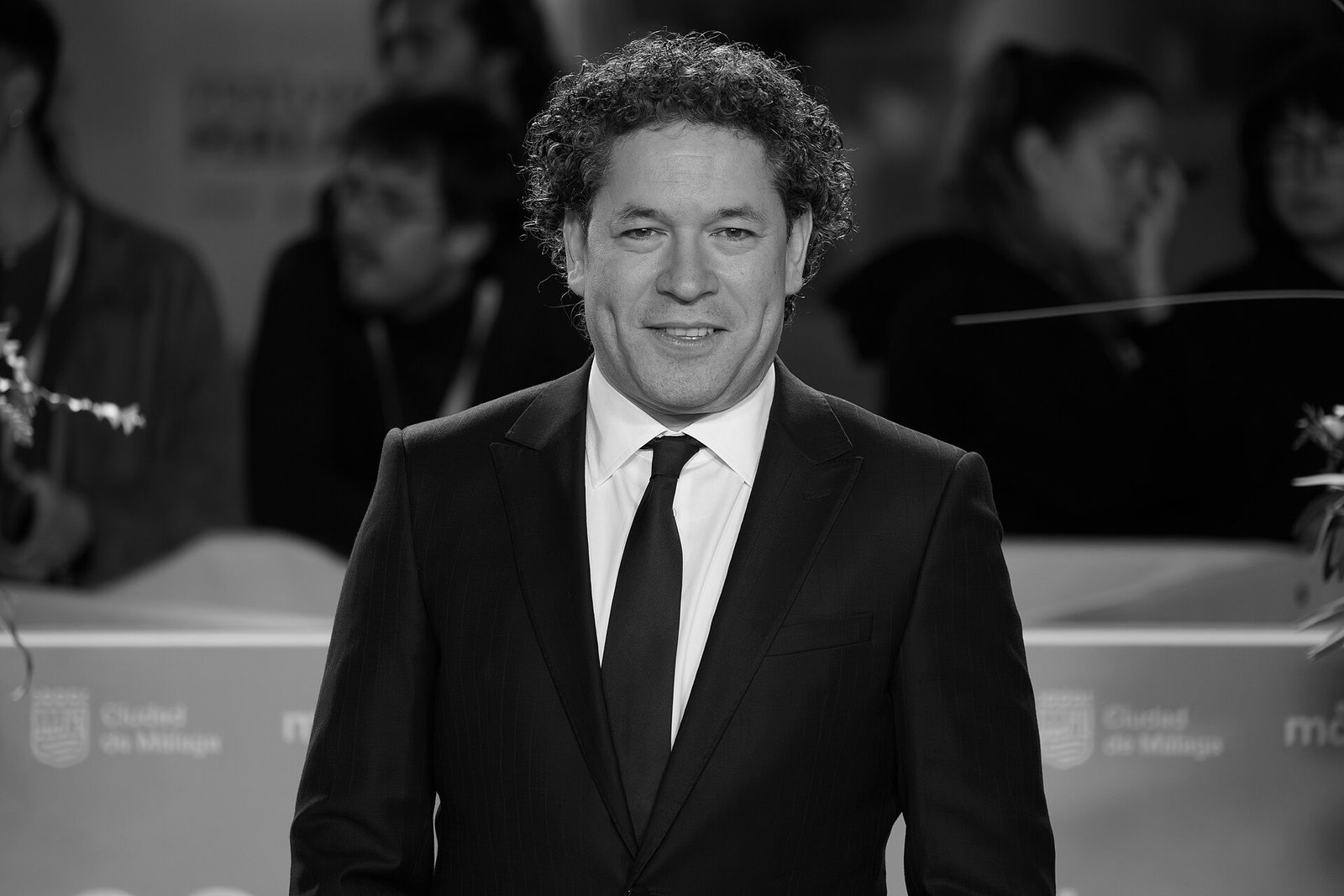
The party starts on the plaza, not in the hall. A banner hangs over Lincoln Center in English and Spanish. It reads "Our new era starts now." Mariachi and Latin bands play. There are Venezuelan corn arepas on offer and an Argentine barbecue going.
That was the welcome for Gustavo Dudamel last Wednesday night, September 30, at the New York Philharmonic's opening gala. At 7:18 p.m., by the account of EL PAÍS, he was formally crowned the orchestra's music and artistic director, and the crowd burst into applause. He is 45. He spent 17 years running the Los Angeles Philharmonic. He is the first Latino to lead the oldest orchestra in the country.
Now the orchestra is leaving town with him. On Friday it opens a European tour at the Philharmonie de Paris, the first time in a decade it has toured the continent.
A Gala in Bright Colors
Inside, the hall did not look like the hall. EL PAÍS describes bright cloth fixtures strung from the ceiling during the dress rehearsal, and flowers in the same loud palette that guests were meant to carry home. The seats were full of faces. El Diario NY lists Steven Spielberg, Alec Baldwin, Bernadette Peters, Fiona Shaw and Carolina Herrera, a fellow Venezuelan, in the audience. Governor Kathy Hochul handed the conductor a plaque recognizing his commitment to the arts.
The program skipped the usual gods. No Mahler, no Bernstein. Instead Dudamel built a night out of the Americas. Alberto Ginastera's Four Dances from Estancia. Juan Bautista Plaza's Fuga Criolla. Gabriela Lena Frank's Mestizo Waltz. The New York premiere of Mujer Arena by the Mexican composer Gabriela Ortiz. The United States premiere of Circus, from the actor Anthony Hopkins's 1947: Suite for Piano and Orchestra, with the pianist Sergio Tiempo at the keyboard. It closed with Duke Ellington's Harlem.
Then came the trick. Dudamel slipped in an excerpt from Disclosure Day, Spielberg's science fiction thriller, with a score by John Williams. Spielberg blew him kisses.
"I think you earn respect when you get close to people, when you understand them."
That is the whole philosophy, and Dudamel laid it out for EL PAÍS during a break in the dress rehearsal the day before. "Regarding respect, you have to change the concept a little," he said. "I think you earn respect when you get close to people, when you understand them. It's not about attracting an audience out of obligation, making them listen to classical music... no."
He has been showing his hand for weeks. The season opened on September 10 at Radio City Music Hall, with Liev Schreiber hosting and Lizzo and St. Vincent on the bill. "These first weeks are – I'm not saying an appetizer, but a taste of the direction we want to take," he told the paper.
The Boy at the United Nations
The story he likes to tell starts in 1994. Dudamel was 13 and came to New York with Venezuela's National Children's Orchestra. They were promised a performance at the United Nations. It turned out to be a corner of the cafeteria. "Playing three notes, almost certainly completely out of tune," he told EL PAÍS. He recalls their teacher showing them the ballet and the Philharmonic, then making a promise. "Someday, in the not-too-distant future, we will be here."
He has also been thinking about who gets in the door. Matías Tarnopolsky, the Philharmonic's president and chief executive, went straight at the idea that the place is too expensive. "You can get a ticket here for $17 (€15). There are cafes that are more expensive," he told EL PAÍS.
Dudamel's pitch for the concert hall is a room where politics stays at the door. "You sit next to someone and you don't ask them who they voted for or where they come from or what they do," he said. "No, people sit and listen, united, for two or three hours."
He is staying close. Vogue reported in its September profile that he and his wife, the actress and director María Valverde, have been renting on the Upper West Side and plan to stay near Lincoln Center. The neighborhood is already setting the table. After the subscription season opened on September 16, about 160 guests crossed Broadway to Brasserie Boulud, which opened its doors for the party ahead of its official debut, amNewYork reported.
A Send-Off With Yo-Yo Ma
The rehearsal for Europe happened in public. On Friday night, October 2, the orchestra played a short program at Geffen Hall that New York Classical Review called a crowd-pleaser. Tania León's Imágenes Mestizas, a Philharmonic commission. The Adagietto from Mahler's Fifth, which Dudamel stretched to about ten minutes. Then Osvaldo Golijov's Azul, with Yo-Yo Ma out front on cello, Michael Ward-Bergeman on an electrified hyper-accordion, and the percussionists Jamey Haddad and Cyro Baptista. The review notes that the city's new mayor was in the house, and that Golijov came up to take a bow.
The orchestra is leaving town with him.
The tour runs from October 9 to 22, according to EL PAÍS, with stops in Paris, Barcelona, Madrid, Berlin, Hamburg and Vienna. The first night in Paris pairs the European premiere of León's piece with the whole of Mahler's Fifth. "It's not about traveling for the sake of traveling," Dudamel told EL PAÍS. "It's about connecting with the community, with each culture."
Back home, the Philharmonic has a Halloween treat waiting. From October 28 to 31, the conductor Anthony Parnther leads the orchestra through the score of Jordan Peele's Get Out, played live with the film.
The plaza will be quiet for a few weeks. The banner said the new era starts now. It turns out the new era travels.