Art
Closing Time at St. Nick's, Gerald Cyrus and His Harlem Nineties
A long-overlooked photographer's black and white decade uptown, from the jazz rooms to the late train, finally gets its book
The picture is called Closing Time, St. Nick's Pub, Harlem, 1997. The set is over, or nearly. The room on St. Nicholas Avenue is still full of bodies and heat, and nobody looks ready to go home. That is the mood of almost everything Gerald Cyrus shot uptown in the 1990s, and this month it finally lands between hard covers.
Uptown Odyssey, a new monograph from the independent publisher TBW Books, gathers Cyrus's black and white photographs of Harlem across that decade. It runs 146 pages with 72 plates, sells for $45, and was edited by the writer Gioncarlo Valentine, who also wrote the introduction. On Saturday, The New Yorker previewed the book with a portfolio and an essay by Valentine that reads less like a review than a fan letter.
A Decade Uptown
Cyrus came to New York in 1990 to study for an MFA at the School of Visual Arts. He was 33. He started photographing the city right away and kept at it for the next ten years, walking Harlem's corners, riding the trains to and from class, and spending his nights in the neighborhood's jazz rooms.
According to TBW Books, the book follows that path as a kind of loop. It opens on the street, with kids, families, characters and storefronts. It drops into the subway and the strange in-between state of the ride. Then it climbs back up into the clubs, where the music takes over the room.
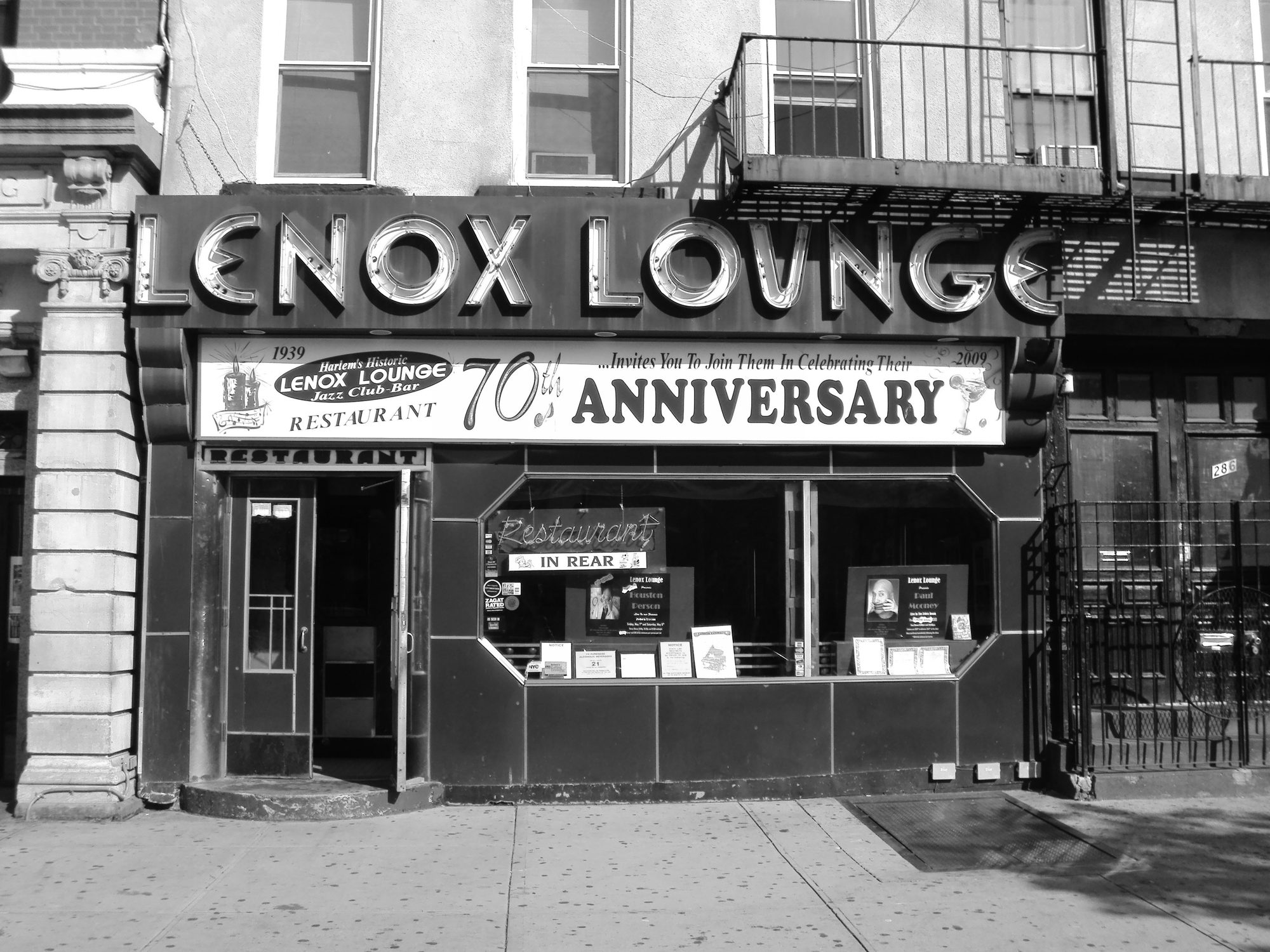
The titles alone sketch a map of a Harlem night that no longer exists. Silhouettes, Lenox Lounge, Harlem, 1996. Argument, Metro Bar, Harlem, 1994. Dancers and Others, St. Nick's Pub, Harlem, 1997. Couple Leaving Lenox Lounge, Harlem, 1997. The Lenox Lounge, opened in 1939 and once a stage for Billie Holiday, Miles Davis and John Coltrane, closed at its original address on Lenox Avenue at the end of 2012, and the building came down in 2017. St. Nick's, a Sugar Hill room known for decades of late jam sessions, is gone too.
The daytime pictures carry the same charge. Valentine singles out a 1994 frame of two girls posing beside an open fire hydrant, water soaking their legs. Another, from 1991, follows a figure dressed in white out of the flat light of a train station and into the dark. In a third, from 1997, five men stand under a blazing neon sign that reads Lounge.
"When I look at Gerald Cyrus's jazz photographs, I can hear the music." Gioncarlo Valentine
The Box of Prints in Philadelphia
The book exists because of a chance find. In 2024, Valentine came across a slim booklet of Cyrus's work, Harlem Nights 1990-2001, in the bookshop of the Photographers' Gallery in London. When he went looking for more, the only other book he could find was Stormy Monday, a monograph Cyrus published himself in 2008.
Valentine reached out, and Cyrus invited him to his studio in Philadelphia, where the photographer has lived since 2000. The row house is given over almost entirely to his archive. In the New Yorker essay, Valentine describes hauling boxes of prints up creaky stairs and spending days going through them. TBW says he spent a year with Cyrus, sorting silver gelatin prints and printing alongside him in the darkroom.
Some of what they pulled out had never been seen. Many of the subway pictures in the book were put away in a box more than 30 years ago, set aside as too familiar. They are published here for the first time.
The titles alone sketch a map of a Harlem night that no longer exists.
TBW places Cyrus in the line of Roy DeCarava and the Kamoinge Workshop, the Black photography collective he belonged to. A postcard wall in his darkroom, as Valentine describes it, nods to the same family tree, with DeCarava, Romare Bearden, Beuford Smith, Renée Cox and Josef Koudelka among the names. The publisher also makes a point that is easy to miss now. These pictures come from a time when people moved through public space without bracing for a camera, and Cyrus photographed them up close, with care, as someone who belonged in the room.
Late to the Party
The frustration in Valentine's essay is hard to miss. He writes that Cyrus spent years sending emails and PDFs of his work to major publishers and heard nothing back. Uptown Odyssey is the first time a publisher has taken on a full monograph of these pictures. Valentine describes Cyrus himself as calm and without bitterness, a photographer who seems to have made peace with institutions that have not yet caught up.
One detail keeps coming back in the essay, and once you notice it, you see it everywhere in the work. It is sweat. A damp satin blouse. A musician dabbing away sweat with a small white rag in the middle of a tune. In Cyrus's Harlem, pleasure takes effort, and the night shows on everybody.
New York has spent a lot of this fall looking back at its own after hours, from Immanuel Wilkins at the Vanguard to the downtown histories on the museum walls. Uptown Odyssey belongs on that shelf. It is a record of rooms that closed and people who kept the music going in them, made by a man who was there at closing time with his camera up.