Past Continuous, Krasner and Pollock Share the Walls at the Met
The Met gives a Brooklyn painter and her famous husband equal billing for the first time
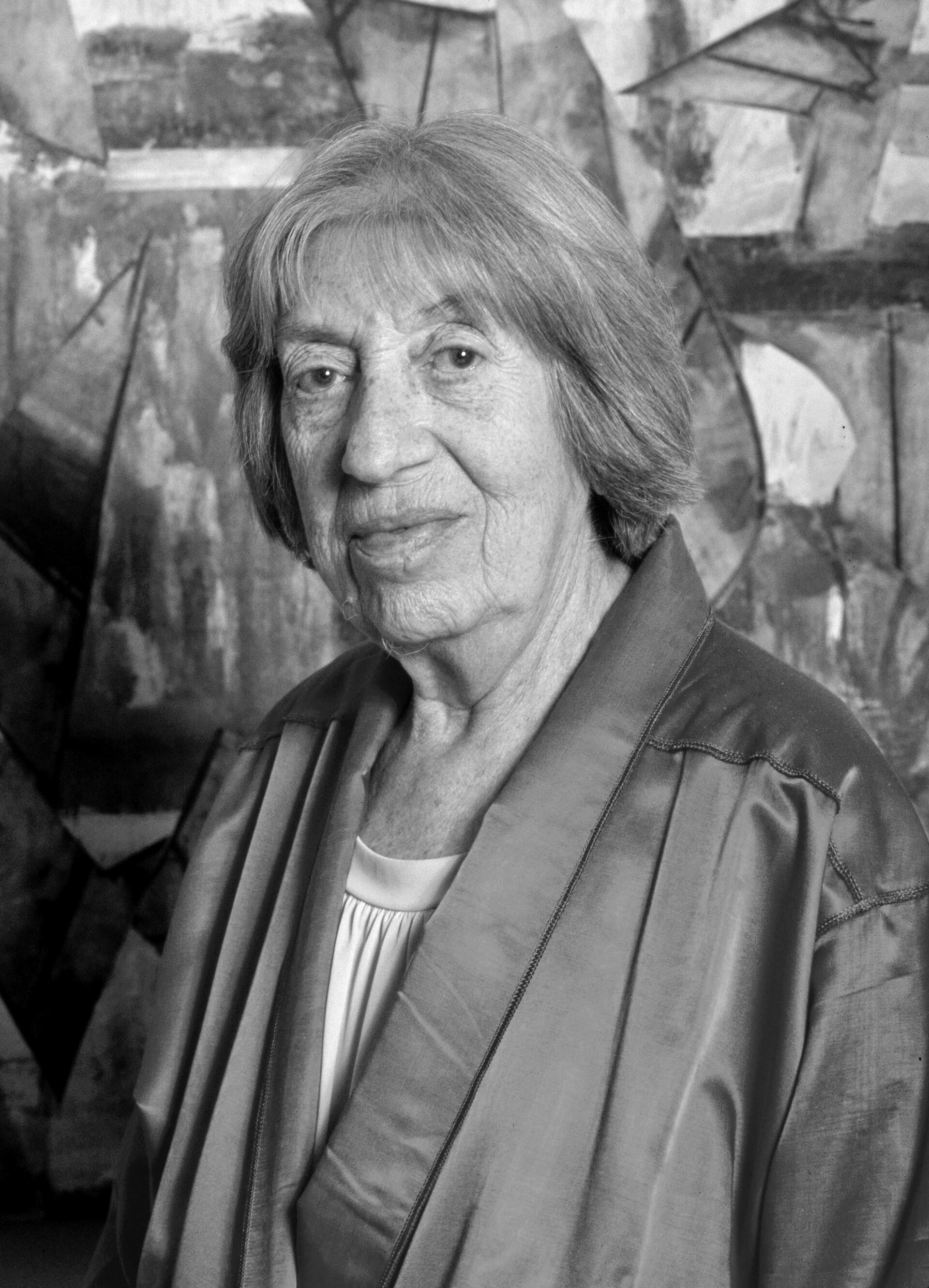
For most of the last century the story went one way. Jackson Pollock was the star, the man who made the drip painting famous. Lee Krasner was too often filed as his wife. On Sunday the Metropolitan Museum of Art opens a show built to retire that version for good.
It is called Krasner and Pollock, Past Continuous, and it runs from October 4 through January 31. The Met is putting more than 120 paintings, works on paper and pieces of ephemera on view, drawn from its own collection and from more than 80 lenders in the United States and abroad. It is the first major New York exhibition devoted to either artist in more than 20 years. It is also, according to the museum's own description, the first show to trace the whole of both careers together.
The borrowed list alone says something about the stakes. The announced lenders include MoMA, the Whitney, Tate, the Centre Pompidou, the Peggy Guggenheim Collection, the National Gallery of Art and the Art Institute of Chicago, among others. A few rarely seen pieces are coming out of private collections.
Two Artists, One Studio Town
Krasner was a New Yorker from the start. She was born Lena Krassner in Brooklyn in 1908, the child of Jewish immigrants from Ukraine. She studied with the painter Hans Hofmann, whose teaching opened up the European avant garde to her and shaped the abstraction she would spend her life pushing forward. Pollock was born in Cody, Wyoming, in 1912 and grew up in Los Angeles and across the American West.
They were both young and still finding their way in New York when the artist John Graham included them in the same group show. They married in 1945 and moved out to Springs, on Long Island. They lived and worked there, bound together in every sense, until Pollock died in 1956.
Pollock's life's work had secured his legacy, while the nearly three decades that Krasner survived him marked some of the most transformative years of her career.
That line comes from the Met's announcement of the show, as reprinted by Arts & Collections, and it is the key to the whole thing. Krasner lived until 1984. She kept working and kept changing long after the man she was so often filed under was gone. The show takes its subtitle from a Krasner painting of 1976, a late work, and the choice is pointed. This is not a Pollock retrospective with a room for his wife. It sets two careers side by side, bound together while both were alive and then carried on by Krasner alone for almost thirty years.
Equal Terms
The images released with the announcement set one work by each artist next to the other. For Krasner, Image Surfacing, from around 1945. For Pollock, Number 1, 1950, the painting known as Lavender Mist. Put next to each other, the pairing makes the argument quickly. Both artists were working out how far abstraction could go in the same years, under the same roof, with the same urgency.
Max Hollein, the museum's director and chief executive, framed the approach in the Met's announcement. The exhibition, he said, considers "each artist on their own terms while also foregrounding their consequential relationship." He tied the show to the work of the Met's Department of Modern and Contemporary Art and to the Oscar L. Tang and H.M. Agnes Hsu-Tang Wing, which is scheduled to open in 2030. A show like this one hints at how the museum wants to tell the story of modern art once that wing arrives.
It lands in a fall when New York museums are looking hard at the city's own art history, from the Bowery survey at the New Museum to smaller gallery shows around town. Krasner and Pollock came of age with the painters who moved the center of modern art to New York in the 1940s. Krasner's Brooklyn childhood and the couple's early years in the city are part of the city's own history, not just the art world's.
After Dark on Fifth Avenue
The best time to see it may be late in the week. According to Artforum's listing for the show, the Met stays open until 9 p.m. on Fridays and Saturdays. Those two late nights are the natural time for a slow walk through the galleries at 1000 Fifth Avenue, after dinner and before a drink.
Go looking for the conversation between the two. Pollock is the pioneer of the drip. Krasner, as the Artforum listing puts it, explored abstraction with an emphasis on nature and color. The Met describes their working methods as distinct but connected. Seeing the two bodies of work in parallel, decade by decade, is the point.
The show runs through the end of January. That leaves the whole of the holiday season and the long, dark weeks after it. It is worth more than one visit. The first time, most people will walk in looking for Pollock. The second time, they will come back for Krasner.