Culture
The Man Who Gave Jazz a House, Gordon Davis Dies at 85
The parks commissioner who helped revive Central Park and the founding chairman of Jazz at Lincoln Center has died in Manhattan
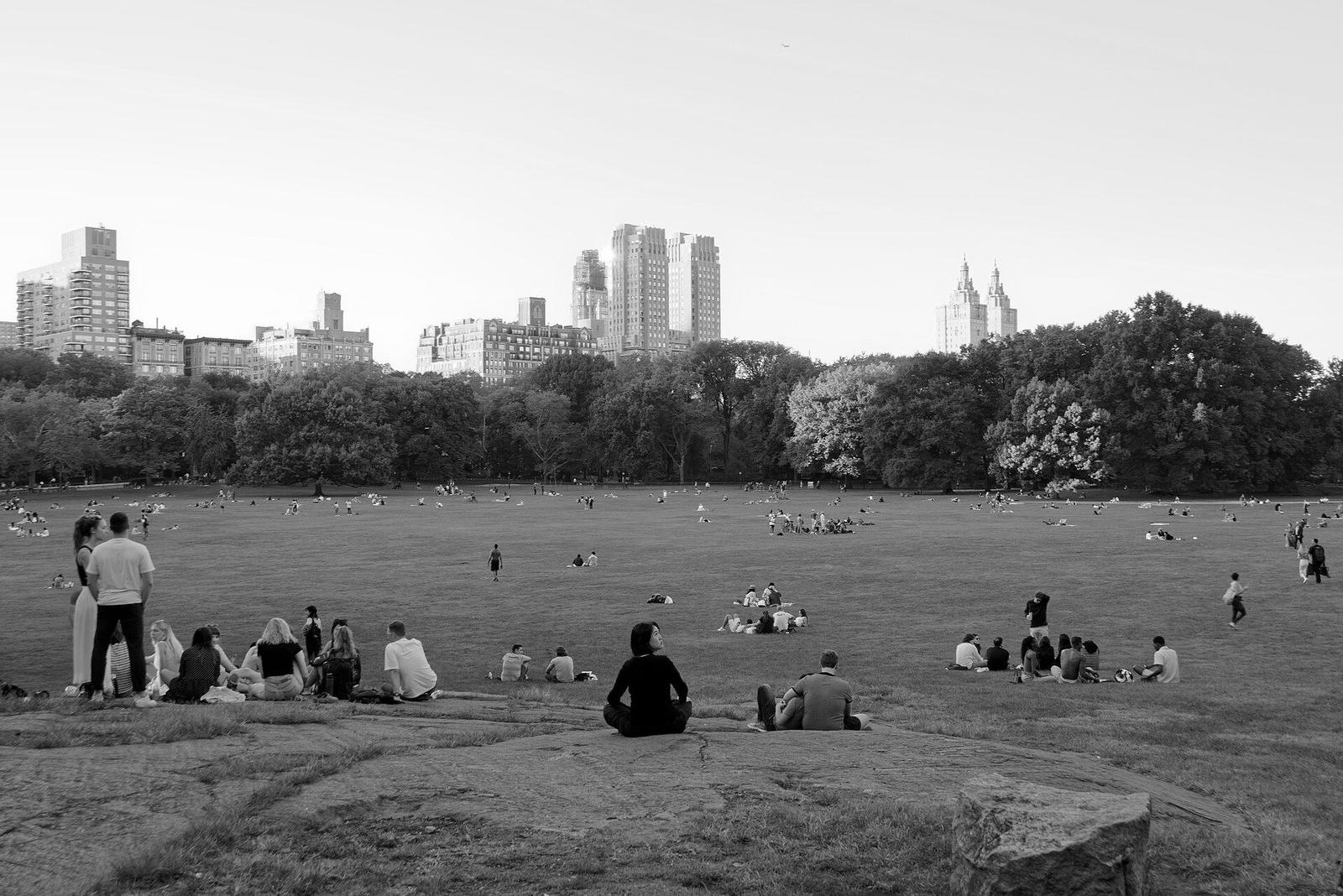
Late on a warm evening, the Sheep Meadow empties slowly. Blankets fold. Someone packs up a speaker. The skyline of Central Park West turns gold and then gray, and the lawn stays green under it. Almost nobody crossing that grass tonight will know the name of the man who saved it.
His name was Gordon J. Davis. He died on Sunday, October 4, at a hospital in Manhattan. He was 85. The cause was complications of emphysema, his daughter, Elizabeth Cooper Davis, told The New York Times.
Davis was a lawyer by training and a civic builder by temperament. He was the city's first Black parks commissioner. He was a founding trustee of the Central Park Conservancy. And he was the founding chairman of Jazz at Lincoln Center, the institution that gave the music its own house at Lincoln Center. If you have ever lain on that lawn on a summer night, or sat in the dark at a jazz set in that house, you have been inside his work.
A Lawn Worth Fighting For
He came to New York from Chicago, where he was born in 1941, and arrived after Harvard Law School in 1967. He went to work for Mayor John V. Lindsay, and the Times reports he became part of the mayor's inner circle as a special assistant and speechwriter. In 1978, Mayor Edward I. Koch made him commissioner of parks and recreation. He held the job until 1983.
It was a hard time to take it. The city was still reeling from its fiscal crisis, and the parks showed it. Davis took over an agency that one former City Hall insider remembered without sentiment. "He woke up the parks department from what it was, which was terrible," Diane M. Coffey, a former chief of staff to Koch, told the Times.
His signature project was the Sheep Meadow. Davis brought in James Taylor for one last concert before the field closed to the public for a year of repairs, according to the Times and WBGO. He also helped secure a large grant from the governor's office to pay for the work.
The Central Park Conservancy, in a paid notice published Wednesday, described that 1980 restoration as the first major collaboration between Davis and Elizabeth Barlow Rogers, the urban planner and Olmsted historian he had appointed as Central Park's first administrator in 1979. Together they set up the Conservancy, the public and private partnership that has run the park's restoration ever since. The notice says it has finished more than 200 capital projects in the park.
"Parks appeal to me. They're one of the few places that are genuinely democratic."
That was Davis speaking to The New Yorker after his appointment, as quoted by the Times. It explains a lot about how he worked.
Music in the Park
Davis understood that a park is also a stage. WBGO credits him with making possible Elton John's concert in Central Park in 1980 and Simon and Garfunkel's in 1981. The second one became legend. The idea for a free benefit concert in the park came from Davis and the promoter Ron Delsener. On September 19, 1981, Paul Simon and Art Garfunkel played the Great Lawn for a crowd put at 500,000 people, and the proceeds went toward repairing the park. The record of that night, The Concert in Central Park, became a hit album.
Under Davis the department also created the urban park rangers and began the revival of Bryant Park, according to the Conservancy.
The House of Swing
His second act moved indoors. In 1987, Davis joined the trumpeter Wynton Marsalis, Lincoln Center chairman George Weissman and the writer Albert Murray in founding Jazz at Lincoln Center, according to the Times. He chaired it from the start until 2001. In those years, it became a full constituent of Lincoln Center in 1996, and it began to plan its own home, Frederick P. Rose Hall, known as the House of Swing.
For a city that invented so much of jazz in basements and walk-ups, it was a statement. The music got the same front door as Mozart. Today the young players who fill rooms across town, the kind of artist who holds down the Vanguard stage on a weeknight, work in a world where that standing is taken for granted. Davis was one of the people who made it so.
He served as president of Lincoln Center for about nine months in 2001. He spent decades on cultural boards across the city. WBGO notes his board work with the Dance Theater of Harlem, and the Conservancy lists the Studio Museum in Harlem and the Museum of Modern Art among the institutions where he held leadership or board roles. The Public Theater, which he joined as a board member in 1990, says he advised on the renovation of its downtown lobby and on the recent renovation of the Delacorte Theater in Central Park. The Public called him a fellow advocate for free access to arts, culture and parks. The New York Public Library made him a Life Trustee in 2016.
What Stays
The paid notices in the Times this week read like a map of the city's cultural life. The Conservancy, the Public and the Library all placed tributes. The Public and the Library both sent their sympathies to his wife, Peggy, and their daughter, Lizzy.
The best tribute is simpler. Tonight there will be jazz at Lincoln Center. There will be people on the Sheep Meadow until the light goes. Next summer the Delacorte will fill again. A lot of it is free, or close to it, and open to whoever shows up. That was his idea from the beginning.