Headphones on the Q Train, What New York Listens to on the Ride Home
What the city is listening to on the ride home

The songs are slow and heavy with reverb, built for headphones and for the back seat of a car crossing a bridge after midnight. They sound like the city looks at that hour, lit and empty and a little lonely.
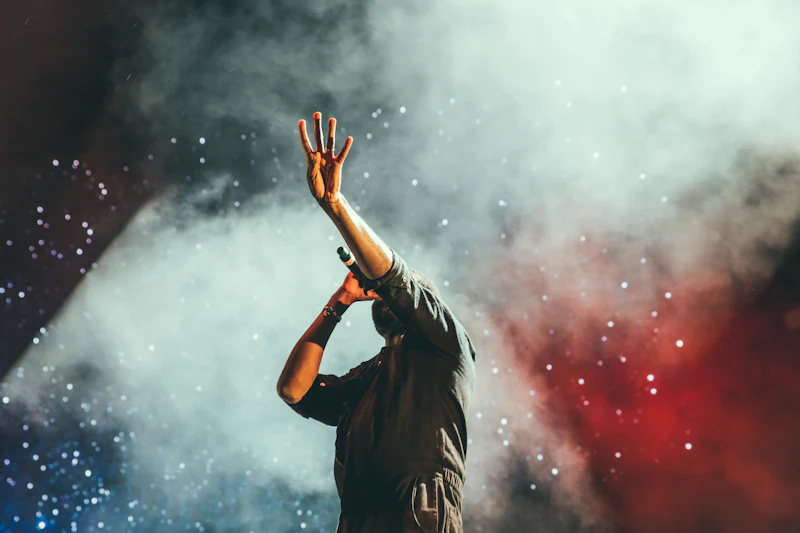
Live, the set is almost entirely in the dark. A single spotlight, a microphone, and a crowd that goes quiet without being asked. People have described it as closer to a séance than a concert.
There is always a moment, somewhere around three in the morning, when the noise drops and the city seems to take a breath. The traffic lights keep cycling for nobody. A single figure crosses the avenue with a coat over one shoulder. In that pause you can hear the hum of the whole place, the power lines and the subway vents and the distant sirens, all of it keeping time.
Influences come up in conversation, but never the obvious ones. Old soul records, film scores, the sound of the radiator knocking in a Bushwick apartment, the particular silence of a subway platform after the last train leaves.
The city itself keeps showing up in the music. Sirens in the background of a vocal take. A train rumbling under a quiet verse. Producers used to edit those sounds out. Now they leave them in on purpose.
The Gear
The business side is harder than ever. Streaming pays fractions of a cent, venues keep closing, and rehearsal space costs more per hour than most people earn. The musicians who last treat it like a craft first and a career second, and they find ways to make both work.
New York has always kept two schedules. There is the city of commuters and deadlines, of lunch meetings and school runs, and then there is the other one, the city that wakes up when the office towers go dark. The second city runs on different rules. People speak more slowly. Favors matter more than money. And the best things happen in rooms you would never find unless someone decided you deserved to know about them.
Collaboration here is intimate and informal. A singer drops by. A guitarist who happened to be in the building adds a part. Somebody's cousin plays a trumpet line through the stairwell door. Half the credits on a typical record come from nights nobody planned.
I make music for the drive home, not the party.
The process is almost entirely nocturnal. Daylight, several musicians told us, is for errands and sleep. The real work happens when the phone stops ringing and the building goes quiet and the only thing left to do is make something.
Much of this world was supposed to disappear. Rents climbed, the old bars sold their liquor licenses to chains, and every few years someone writes the obituary for downtown. But the night has a way of relocating rather than dying. It moves a few blocks east, crosses a bridge, finds a basement nobody else wanted, and starts again.
The Last Take
Audiences have changed too. They arrive earlier, listen harder, and stay later. At the best shows, you can hear the room breathe between songs, and nobody reaches for their phone until the last note has faded all the way out.
The best songs, several writers told us, are rarely the ones that took the longest. They arrive fully formed at the worst possible time, in a cab, in the shower, at the end of a night when everyone else has gone home. The job is being ready to catch them.
Money moves differently after dark too. Nobody pulls out a card at the places that matter. Tabs are kept in someone's head. Debts are settled with introductions, with a good word to the right person, with a table held open on a busy Saturday. It is an economy that runs on memory, and it has outlasted every recession the city has thrown at it.
You cannot schedule a great song. You can only be awake when it shows up.
The City in the Mix
There is a renewed obsession with the physical object. Vinyl pressing plants have waiting lists months long. Cassettes are back in small runs. Fans want something they can hold, and artists want something that will outlive a playlist update.
What ties it all together is a kind of shared discretion. People here have seen a lot and repeated very little. The unspoken agreement is simple. What happens in the room stays in the room, and the room stays open as long as everyone keeps that promise. It is the oldest rule in the city, and it is still enforced.
Mixing is where the mood gets decided. A little more space around the voice, a little less brightness in the drums, and a song that felt ordinary suddenly sounds like it was recorded in an empty cathedral at two in the morning.
The last note fades, the lights come up, and the crowd files out onto a sidewalk still warm from the day. Some of them will be humming it all the way home.