Modernism in the Garden, Michael Kors Shows at MoMA
Michael Kors takes his spring collection to MoMA and borrows from the masters upstairs

The first model out wears a pair of earrings that look stolen from the building behind her. Each one is a black disc hung on a steel hook. The Guardian caught the reference at once. The shape belongs to Alexander Calder, whose mobile Lobster Trap and Fish Tail hangs in the museum's stairwell.
Nothing was stolen. Michael Kors simply brought his Spring 2027 collection to the museum's sculpture garden on a Friday morning during New York Fashion Week and let the collection talk back to the art. The date was September 11. It was the 25th anniversary of the attacks, and Kors did not pretend otherwise.
A Designer Raised on the Museum
Kors has always been a New York designer in the most literal sense. He launched his label 45 years ago. As W Magazine reminds readers, he skipped his senior prom at 17 to go to Studio 54 instead. Last season he threw his anniversary show at the Metropolitan Opera House at Lincoln Center, a room built for sparkle. This time he traded the chandeliers for daylight and marble.
The idea came from a trip. This summer Kors and his husband went to Paris to see a major Calder retrospective. "We were just in love! The magic of it," he told The Guardian at a preview. Modernism became the organizing thought for everything that followed.
The references are easy to read if you spend your weekends in museums. An evening dress has crescent shapes cut away at the shoulders, a nod to the paper cutouts of Henri Matisse. A pencil skirt zigzags in black and white, a wink to the Cuban American painter Carmen Herrera. A black dress trails a single ribbon of banana yellow from its hem, which reads as pure Ellsworth Kelly. Kors named Herrera, Calder, and Kelly as his starting points when he spoke to Reuters.
I love the tension of something sculptural with something very crisp.
That is how he put it to Reuters, and the clothes bear him out. The show opens on sharp black separates. A blazer closes with a single button at the chest and sits over cropped capris. Asymmetric dresses follow in primary red and yellow, some split between yellow and black. A green micro skirt suit with a Peter Pan collar pulls the whole thing toward the 1960s. Thin black and white stripes play tricks on the eye.
Black, White, and a Little Tobacco
For a designer known for glamour, the palette is disciplined. The base is black and white. "It's New York," Kors said, according to Reuters. The Guardian noted that the softer, traditionally feminine shades of past seasons gave way to tobacco, black, and moss green. Red, green, and yellow arrive only as punctuation.
That restraint is what makes the clothes feel useful after dark. A black single-button jacket and a narrow skirt will go from a gallery opening to a late table downtown without asking for a costume change. The stripes and the one bright ribbon do the talking. It is the same argument this magazine made about treating black as a color of its own, and Kors makes it with more wit than most.
The accessories are where the fun lives. W Magazine counted sculptural bags hung from silver hoops, leather coin purses worn stacked like necklaces, oversized bauble rings, and sunglasses with a beehive attitude. Makeup stays clean, broken now and then by a red lip or a flash of neon yellow on the eyelid. Even the faces are color blocked.
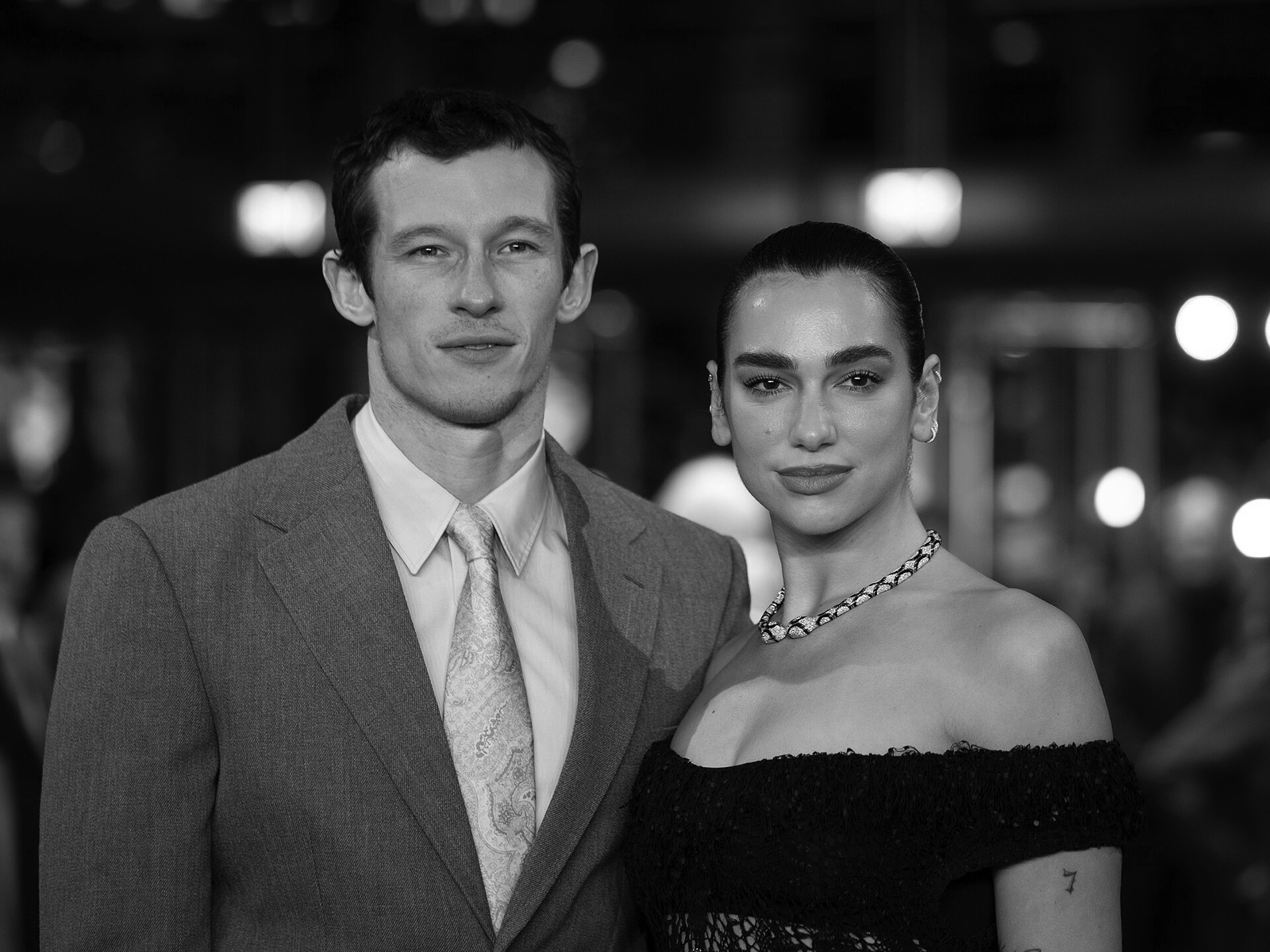
The front row was full of familiar names. Gabrielle Union-Wade, Grace Van Patten, and Lea Michele were among the guests, Reuters reported. Alex Consani closed the show. As she walked, Harry Nilsson's "I Guess the Lord Must Be in New York City" drifted across the garden.
A Remembrance in Plain Sight
The date gave the morning a second meaning. Kors told The Guardian the show was also a remembrance and a salute to the city's stubbornness. "We keep going," he said. He recalled how people once predicted that no one would want to live downtown again. "And now look at us."
It is a line that lands differently in a museum garden in Midtown on that particular morning. The collection does not wear its grief. It wears optimism instead. "I love the boldness of modernism and the optimism of it," Kors told The Guardian. The clothes feel like proof of that belief.
The collection does not wear its grief. It wears optimism instead.
There is also business behind the beauty. Kors's parent company, Capri Holdings, cut its annual revenue forecast in August, Reuters reported, pointing to inventory delays at the brand and softer demand for its handbags. Revenue at Michael Kors fell to $590 million in the quarter ended June 27, down from $635 million a year earlier. Capri has pulled back on discounting and is refreshing stores to sell more at full price. A collection this sure of itself is part of that pitch.
Still, the lasting image is not a revenue line. It is a woman in a black dress with one yellow ribbon, walking through a sculpture garden while a Calder hangs somewhere inside. It is a designer who went to Studio 54 at 17 and still believes the best parts of New York are the ones you can walk into. Spring clothes, shown in September, meant for a city that keeps going.