New York's Student Housing Problem Is a Career Problem, Too
Record rents, scarce dorm beds and a campus crime law that stops at the property line. Career educator Manuj Mittal says universities and employers should treat a safe place to live as part of getting students ready for work.
This summer, a bed in a shared room in an NYU apartment-style residence cost a visiting intern $5,918. The stay ran about 11 weeks, from late May to early August. A studio cost $8,459.
NYU describes itself as the largest student and intern housing provider in New York. By the standards of the market outside its doors, those prices were not unusual.
Manhattan's median rent was $5,285 in August, 7 percent higher than a year earlier, according to the Corcoran Group. The average studio hit a record $4,186, up 11 percent. Corcoran noted that a studio now costs what a one-bedroom did in early 2022. Just 1.51 percent of the borough's apartments sat vacant.
That is the market New York's students walk into every fall. It reaches commuters at the city's public colleges, international graduate students with no American credit history, and summer interns who land an offer in Midtown and then need somewhere to sleep. The cost is easy to see. The risk is harder to spot, because much of it sits outside the places where universities count it.
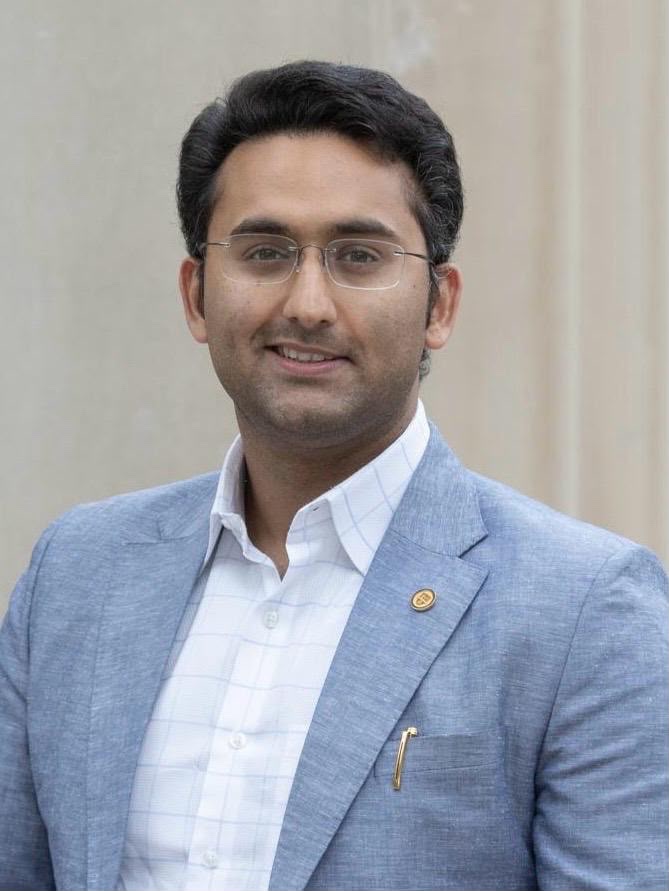
Manuj Mittal has spent his career on a related question, which is what students need before their first day on the job. He most recently worked as an assistant director and career consultant at the University of Rochester's Simon Business School, advising graduate finance and accounting students. He is also a doctoral candidate at Rochester's Warner School of Education. Mittal came to the United States from India for graduate school, earned an MBA and a master's in finance at Simon, and worked in investor services at Morgan Stanley in New York.
Mittal’s own experience at the University of Rochester offers a case study. When he first came to the United States for higher education, before the COVID-19 pandemic, securing housing became one of his earliest challenges. After not being selected through the university-affiliated housing lottery, he lived off campus for two years. As an international student in Rochester, he had to navigate unfamiliar neighborhoods, transportation, affordability and another obstacle common to students arriving without a U.S. credit history: finding a guarantor willing to co-sign a lease.
Mittal said support from people in the Rochester community ultimately helped him navigate those challenges. The experience reinforced his view that housing, transportation and community support are not peripheral to higher education, but part of the infrastructure that determines whether students can successfully build a life around their studies.
His central argument, laid out in a Global Banking & Finance Review profile last month, is that experiential learning belongs inside the curriculum. Employer projects. Integrated internships. Simulations that mirror real workplace decisions. At Simon Business School, he helped co-instruct ‘Career Strategy and Professional Readiness’, a 14-week graduate course built to give students real employer experience before they enter the hiring process. His doctoral research examines how universities can redesign graduate programs so that what students learn matches what the profession now demands.
That approach runs into trouble the moment a student accepts an offer in New York. About half of the employers in the National Association of Colleges and Employers' 2026 internship survey said they give interns money to relocate. Among them, the average lump sum for housing was $3,310, a little more than half the price of that shared NYU bed. The average intern in the survey earned $23.35 an hour. Working full time for those same 11 weeks, an intern at that rate would gross about $10,100 before taxes.
Mittal says schools that build internships into the curriculum can't treat housing as someone else's problem. If they want students working in the city, they have to reckon with where those students will live.
"We tell students the internship is where the real learning happens," Mittal said. "Then we hand them an offer letter and a city where the deposit is due before the first paycheck."
A competitive job market with no room
New York's last official count of rental vacancies, the 2023 Housing and Vacancy Survey, put the citywide rate at 1.4 percent. That was the lowest since 1968. Among apartments renting for under $1,100 a month, the rate was 0.39 percent. The cheap units, the kind a student budget can reach, were almost never empty.
Private universities pass the market's prices along. NYU estimates that undergraduates living on campus will spend $26,438 on food and housing this school year.
Public college students face a different problem. The City University of New York enrolled about 247,000 students in fall 2025. It has 2,858 dormitory beds, according to a policy brief published this spring by CUNY CARES, a university program. That works out to roughly one bed for every 86 students. CUNY plans to add 1,172 beds over the next few years. Baruch College's student housing in Midtown was full for this fall, with a waitlist.
The same brief estimated that 13,600 CUNY students experienced at least one episode of homelessness in 2025.
International students carry their own burden. New York hosted 137,799 of them in the 2024-25 school year, second only to California, according to the Institute of International Education. NYU enrolled more than any university in the country, at 27,532. Columbia ranked third.
Most arrive without a U.S. credit file. Landlords typically want a guarantor who earns roughly 80 times the monthly rent and lives in the tri-state area, which often rules out parents overseas. That gap has created a private market for third-party guarantor companies. Insurent has told Brick Underground that its fee for an international student with no U.S. credit is about 98 percent of one month’s rent on a 12- to 15-month lease. In practice, that adds nearly a thirteenth month of rent to the cost of living in New York, pushing the effective price of an education higher before tuition, books or other expenses enter the equation.
"A credit score shouldn't decide whether a talented student can take a job in New York," Mittal said.
Where the safety data stops
By the broad numbers, New York is getting safer. The NYPD said in early September that the city had just recorded its safest summer on record for shootings and murders, and that major crime fell 6.6 percent in August.
The longer view is less tidy. At midyear, major crime was still 25.5 percent above 2019 levels, according to an analysis of NYPD data by the public safety publication Vital City. Felony assaults were up 48 percent from before the pandemic.
How much of that risk students can see depends on federal law. The Clery Act requires colleges that take part in federal student aid programs to report crimes on campus, in buildings they own or control, and on public property next to campus. It does not reach a privately leased apartment two neighborhoods away, which is where many students live.
Columbia's public safety office issued Clery alerts this year for burglaries at buildings on West 115th and West 122nd streets, and for a robbery at a food truck near 117th Street and Broadway. A 2019 case showed what can fall outside the lines. After Barnard freshman Tessa Majors was killed during a robbery in Morningside Park, students told Gothamist they had never been warned about earlier crimes there. Columbia said the park, across the street from campus, was not a location it was required to report on.
Then there is the housing people turn to when they are priced out. The city has estimated that at least 100,000 New Yorkers live in 50,000 or more illegal basement apartments. When the remnants of Hurricane Ida flooded the city in 2021, 11 people died in basement units. How many students live in that hidden stock is unknown.
Fraud is the newest hazard. New York's Division of Consumer Protection has warned that college students are sending deposits for apartments they have never seen, some of which don't exist. Last month, a Rochester television station showed how artificial intelligence can produce a convincing fake college rental, invented address and all, in seconds.
"Safety can't stop at the edge of campus when most of a student's life happens past it," Mittal said.
What he wants changed
Mittal's proposals are aimed at the institutions that send students into the city.
He wants universities that require internships, or give credit for them, to attach a housing plan. That could mean reserved short-term beds, vetted listings or contracts with residence operators.
He wants schools with large international enrollments to offer institutional lease guarantees, so a missing U.S. credit file does not determine where a student can live. Mittal argues that such programs could also create an additional source of institutional revenue at a time when colleges are seeking new income streams amid federal funding cuts.
He wants employers that bring interns to New York to pay housing stipends before the start date rather than folding them into later paychecks.
And he wants colleges to publish crime alerts for the off-campus blocks where their students cluster, even where federal law doesn't require it.
Not everyone agrees universities should take on more of the housing market. NYU's student newspaper this spring examined how the university became the city's wealthiest private landlord. Others argue the only lasting fix is more affordable housing, full stop. A draft city report released in August estimated that New York needs 700,000 new homes over the next decade. Mayor Zohran Mamdani released his housing plan, Block by Block, in May, and the Center for an Urban Future has urged the city to build affordable housing on underused CUNY parking lots.
Mittal doesn't dispute the supply argument. He disputes the timeline.
"Building more housing is the long answer," he said. "A student has four years. Sometimes two."
Universities spend years getting students ready for the interview. In New York, the harder test comes after the offer, when a student has to find a safe place to live in a city with almost none to spare.