The Price of Being Loud, What Rehearsal Space Costs in New York
What rehearsal space really costs in New York

There is no rush here. A single vocal take might happen at four in the morning after hours of doing nothing at all, and that one take might become the song everybody hears next summer.
Audiences have changed too. They arrive earlier, listen harder, and stay later. At the best shows, you can hear the room breathe between songs, and nobody reaches for their phone until the last note has faded all the way out.
There is always a moment, somewhere around three in the morning, when the noise drops and the city seems to take a breath. The traffic lights keep cycling for nobody. A single figure crosses the avenue with a coat over one shoulder. In that pause you can hear the hum of the whole place, the power lines and the subway vents and the distant sirens, all of it keeping time.
The city itself keeps showing up in the music. Sirens in the background of a vocal take. A train rumbling under a quiet verse. Producers used to edit those sounds out. Now they leave them in on purpose.
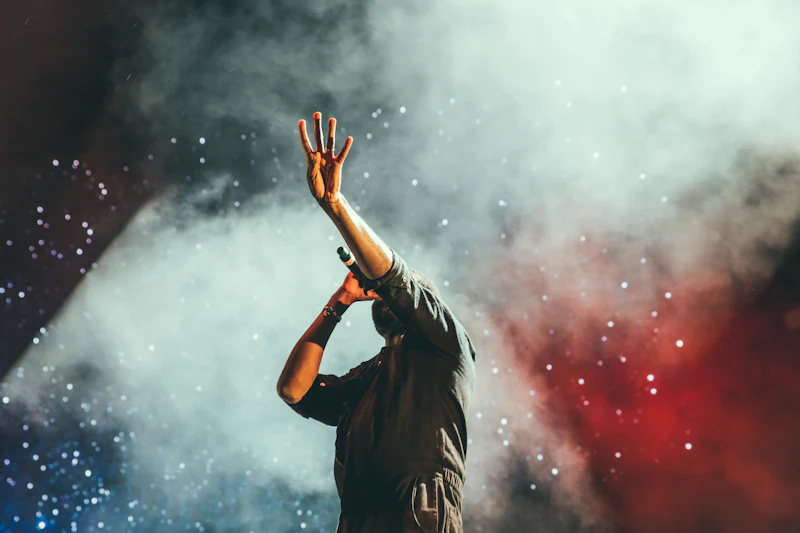
Live, the set is almost entirely in the dark. A single spotlight, a microphone, and a crowd that goes quiet without being asked. People have described it as closer to a séance than a concert.
In the Dark
The best songs, several writers told us, are rarely the ones that took the longest. They arrive fully formed at the worst possible time, in a cab, in the shower, at the end of a night when everyone else has gone home. The job is being ready to catch them.
None of this is written down anywhere official. There is no guidebook to the hours between midnight and dawn, and the people who know it best prefer it that way. What follows is one small piece of that map, pieced together over many nights and more than a few very early mornings.
Collaboration here is intimate and informal. A singer drops by. A guitarist who happened to be in the building adds a part. Somebody's cousin plays a trumpet line through the stairwell door. Half the credits on a typical record come from nights nobody planned.
You cannot schedule a great song. You can only be awake when it shows up.
Radio still matters in this world, just not the radio most people think of. College stations, late night independent broadcasts, and online shows with a few thousand devoted listeners have become the new tastemakers, trusted in a way no algorithm ever will be.
By the end of the night, the city starts to feel smaller. The same faces appear in different doorways. Someone you met at nine turns up again at two, and by four you are sharing a cab across the bridge. That is the real magic of New York after dark. Eight million people, and somehow you keep running into the ones who matter.
The Last Take
Mixing is where the mood gets decided. A little more space around the voice, a little less brightness in the drums, and a song that felt ordinary suddenly sounds like it was recorded in an empty cathedral at two in the morning.
The process is almost entirely nocturnal. Daylight, several musicians told us, is for errands and sleep. The real work happens when the phone stops ringing and the building goes quiet and the only thing left to do is make something.
The light is what you notice first. Sodium lamps turn the avenues the color of weak tea, and the side streets fall into a deep blue that makes every lit window look like a stage set. Cabs slide past with their roof lights off. A delivery bike hums by, then silence, then the rattle of a steel gate coming down somewhere around the corner.
Daylight is for errands. The night is for work.
The Gear
Equipment is part of the mythology. Some producers swear by vintage tape machines rescued from closed studios. Others build everything on a laptop balanced on a stack of books. What matters, they all agree, is knowing when to stop adding and start taking away.
The weather shapes everything. In August the whole city seems to slow down, and the rooftops fill with people chasing a breeze. In January the rooms get smaller and warmer, conversations lean in, and a coat check becomes the most important person in the building. Every season has its own version of a perfect night, and New Yorkers argue about which one is best.
The business side is harder than ever. Streaming pays fractions of a cent, venues keep closing, and rehearsal space costs more per hour than most people earn. The musicians who last treat it like a craft first and a career second, and they find ways to make both work.
There is no finished version, only the version that exists when the clock runs out. That one will have to do, and more often than not it is exactly right.